
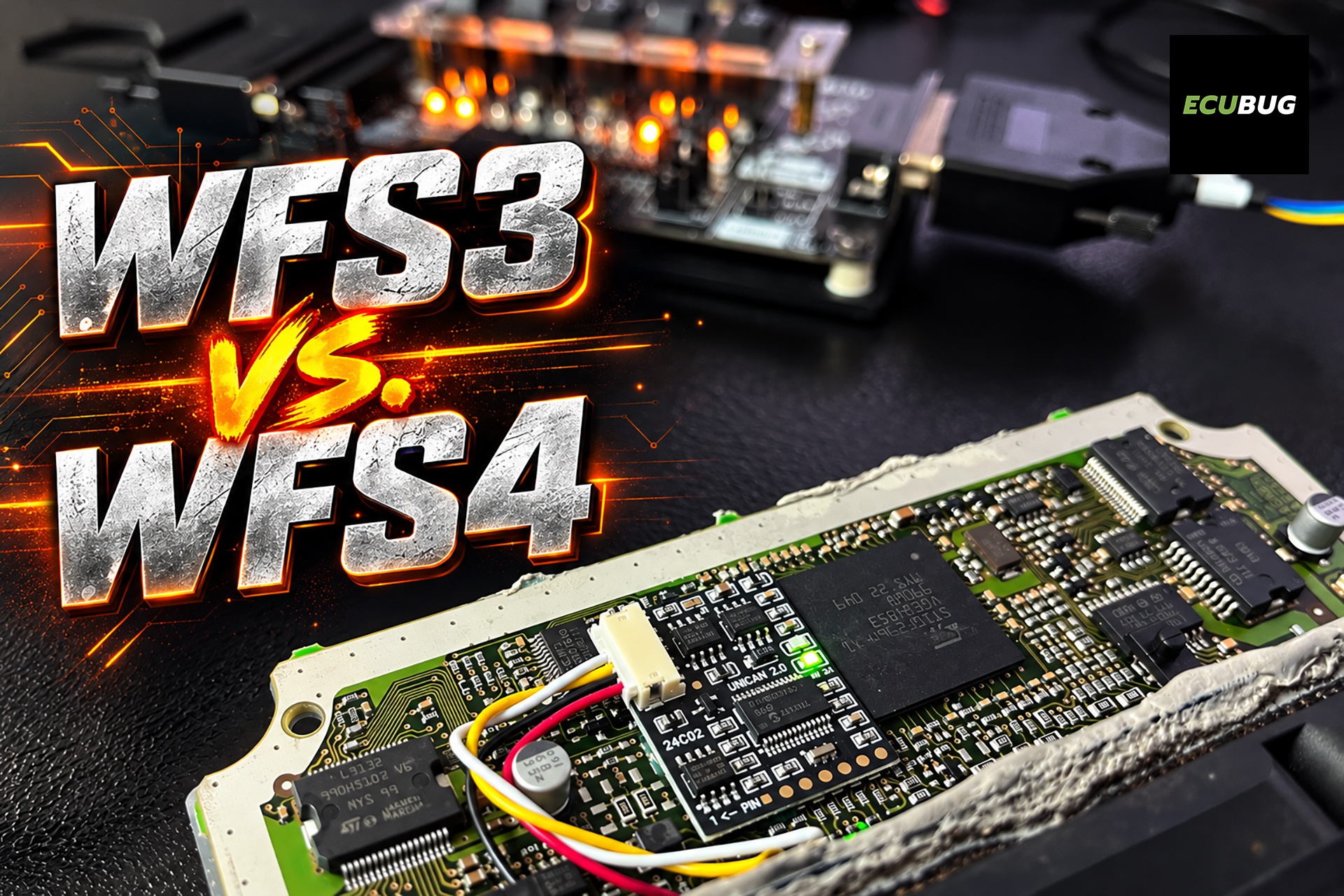
Pick up two Magneti Marelli IAW 4HV engine ECUs – one from a Skoda Fabia, one from an Octavia II. Same housing, same connector, same PCB layout, same microcontroller. On the bench they look like twins. Yet they speak two different immobilizer languages: the Fabia unit runs VAG WFS3, the Octavia unit runs WFS4.
For a workshop this used to mean two problems: two different emulators on the shelf and a real chance of fitting the wrong one. With UNICAN 2 it is one emulator, one wiring method and one decision that actually matters – which immobilizer generation is this ECU really running?
The ECU: Magneti Marelli IAW 4HV
The IAW 4HV is a petrol engine ECU used across the VAG group in the 2000s, with 1.4 petrol engines. Two typical examples from our bench:
- 03C906024B – e.g. Skoda Fabia, immobilizer WFS3
- 03C906024CQ – e.g. Skoda Octavia II, immobilizer WFS4
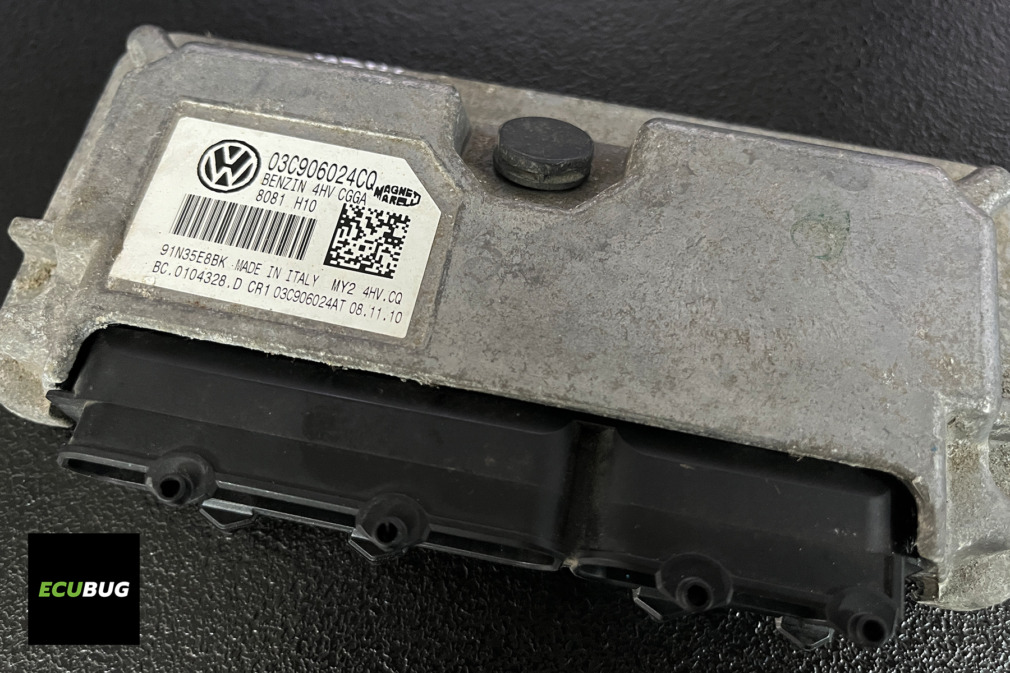
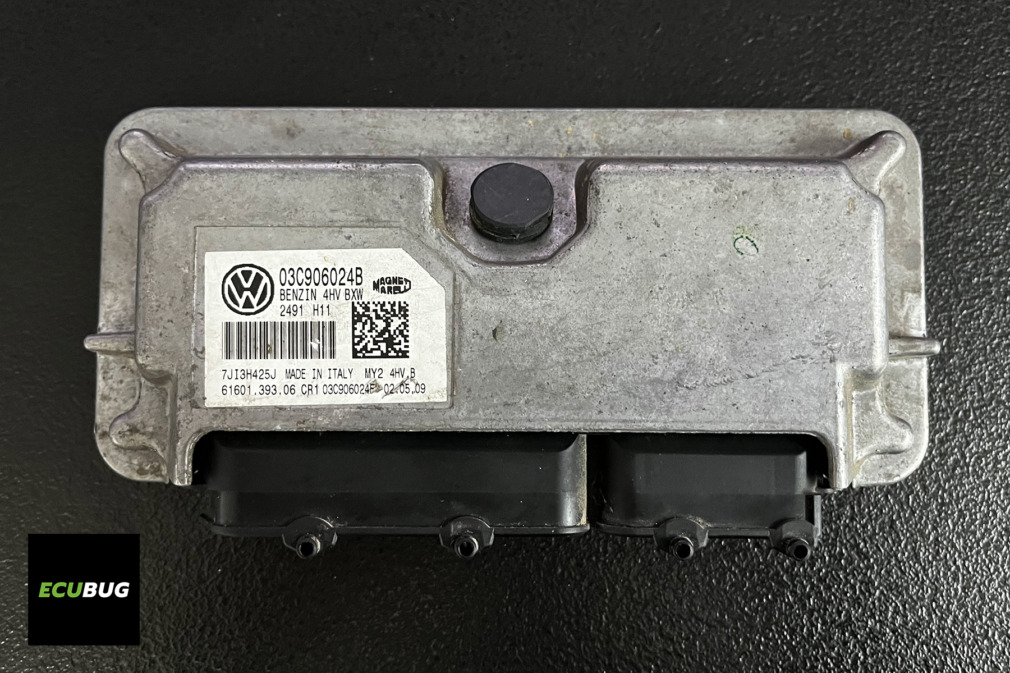
The hardware is the same platform. What changes is the vehicle around it. The immobilizer protocol belongs to the car’s immo generation, not to the ECU hardware. That is exactly why one physical ECU family can end up with two different authentication schemes – and why a part number alone is a hint, never proof.
WFS3 vs WFS4 – what is the difference?
In both systems the engine ECU refuses to run the engine until the immobilizer master (in these cars typically the instrument cluster) confirms that the right key is present and the ECU belongs to this vehicle.
- WFS3 relies on a fixed component-security code shared between the immobilizer master and the ECU. Once both sides agree on that code, the engine is released.
- WFS4 adds further vehicle-specific parameters and a more elaborate exchange between the immo master and the ECU. The ECU checks more than one fixed value before it lets the engine run.
For the vehicle owner the symptoms look identical: the engine cranks, fires for a second or two and dies, the immobilizer lamp stays on, and the diagnostic tester reports an immobilizer fault in the engine ECU. For the repair engineer the difference is fundamental – an emulator configured for the wrong system simply will not release the engine.
When an emulator is the right repair
An immobilizer emulator is not a shortcut. It is the right repair when the original immobilizer chain is faulty and cannot be restored economically, for example:
- the instrument cluster (immo master) is damaged and a matching replacement is not available,
- the original keys or immobilizer data are lost after a cluster or ECU failure,
- the vehicle is a low-value older car where dealer-level component protection repair costs more than the car is worth,
- the ECU has a damaged immobilizer data area and needs to work again with the vehicle’s existing hardware.
One emulator, two systems
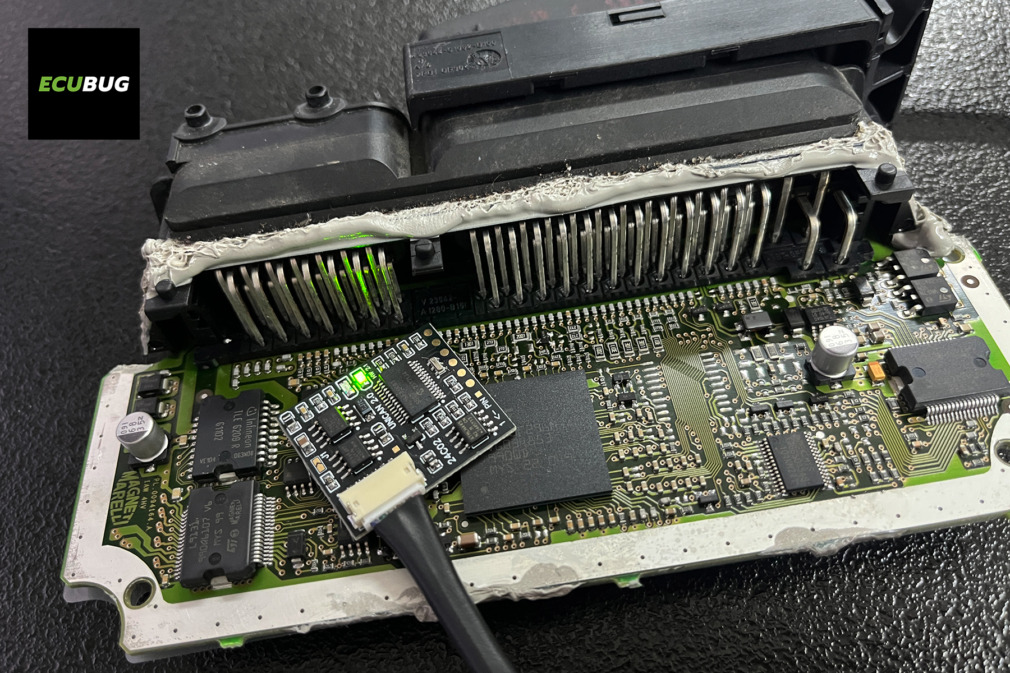
UNICAN 2 is a CAN-based immobilizer emulator. Mounted inside the ECU, it takes over the role of the immobilizer master: it answers the ECU’s immobilizer requests exactly the way a healthy vehicle would.
For the IAW 4HV this brings three practical advantages:
- One part covers WFS3 and WFS4. No need to stock two emulator types for one ECU family. The emulator is configured for the specific system and the specific unit.
- Identical installation. The wiring of UNICAN 2 into a WFS3 IAW 4HV and a WFS4 IAW 4HV is the same. Same connection points, same routing, same workmanship standard.
- The ECU stays original. UNICAN 2 is configured to match the ECU’s own original immobilizer data. The ECU is not rewritten, so the solution survives a later reflash with original software – something a software-only immo deactivation cannot promise.
The one step that decides success: identify the system
Because the hardware is identical, the real expertise lies in the diagnosis. Guessing from the part number, model year or car model is how wrong emulators get fitted.
An experienced engineer settles it in minutes on the bench. The ECU is powered on the test bench and connected to a CAN bus analyser. Right after power-up, the IAW 4HV starts looking for its immobilizer master. The immobilizer traffic it sends – which frames appear, how they are structured and how the ECU behaves while it waits for an answer – is characteristic for each generation. Read the CAN log and the system identifies itself.
We then cross-check the result against the ECU’s EEPROM content. Only when both the CAN log and the memory data point to the same system do we configure the emulator.
Our workflow at MTE / ECUBUG
- Intake and documentation – ECU part number, vehicle details, owner’s consent.
- Bench connection – ECU powered on the test bench, CAN log recorded.
- System identification – WFS3 or WFS4 confirmed from the CAN log and verified against the EEPROM data.
- Emulator configuration – UNICAN 2 set up with the ECU’s original immobilizer data.
- Installation – emulator fitted inside the ECU, identical procedure for both systems.
- Bench test – with the emulator active, the ECU must report no immobilizer fault and release engine operation.
- Return – the ECU goes back plug-and-play: install it in the car, clear fault memory, start the engine.
Key takeaways for workshops
- Same ECU, two immobilizer systems: IAW 4HV can be WFS3 (e.g. Fabia 03C906024B) or WFS4 (e.g. Octavia II 03C906024CQ).
- One UNICAN 2 handles both – no double stock, identical wiring.
- The critical step is correct system identification from the bench CAN log, not the installation itself.
- The ECU keeps its original data and stays compatible with original software updates.
Do you have an IAW 4HV with an immobilizer fault, or a different ECU where the immobilizer chain is broken? Send us the part number and the vehicle details. We will tell you honestly whether UNICAN 2 is the right repair – and if it is not, what is.


